
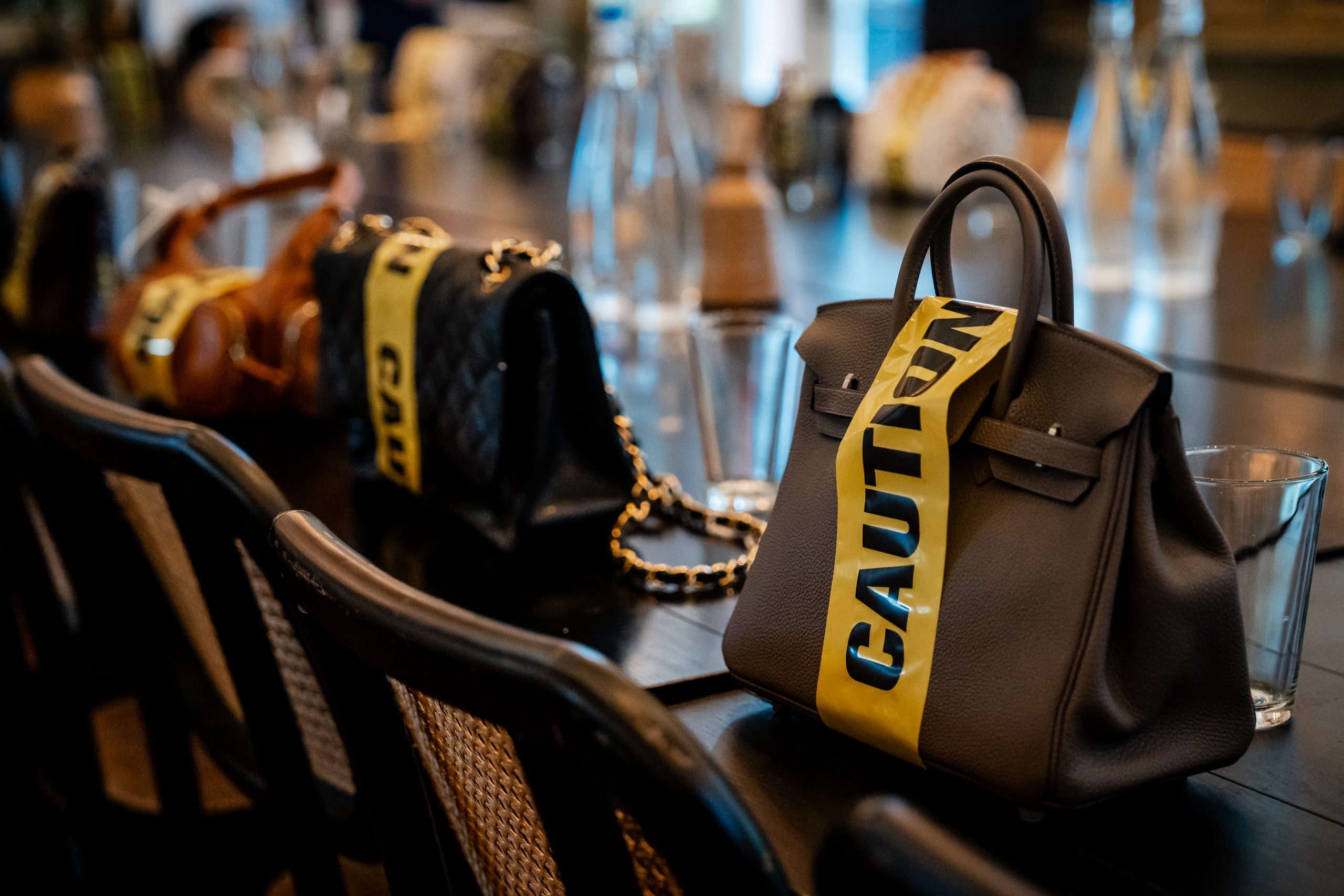
Counterfeit fashion is a booming illegal industry that is impossible to avoid. From fake football kits on our high streets to knock-off luxury handbags being sold on social media, these fakes tell a much darker story than the bargains they appear to be.
Read The Fake Fashion Position Paper Here


Behind the bargains, fake fashion envelops a constellation of harms — economic and environmental damage, threats to consumer safety and an entangled web of human exploitation.
Across the world, men, women and children are hidden in plain sight forced to produce, distribute and sell fake fashion. Exploitation exists end to end in fake fashion supply chains, and in the most severe cases, in the form of forced work, child labour and human trafficking.
Counterfeiting is not a victimless crime. It is a serious criminal enterprise, often conducted by organised crime groups to generate seed funding for other illicit activities such as drug trafficking, human smuggling and cyber crime.
Fake Fashion is now more prevalent than ever, yet there is little being done to address this overlooked human rights scandal.
Streams of Work
Through our Fake Fashion & Forced Labour programme, The Anti-Slavery Collective aims to address this human rights scandal through a coordinated response working across policy reform, operational enforcement, public awareness and corporate accountability.

Recent Events
OECD
In March 2025, The Anti-Slavery Collective was invited by the Organisation for Economic Co-operation and Development (OECD) to speak at their inaugural Forum on Countering Illicit Trade in Paris. Our CEO, Sarah Woodcock, spoke on a panel highlighting the human cost of illicit trade, particularly in counterfeit fashion.

Hidden Threads
In September, to align with the 80th UN General Assembly and New York Climate Week we brought together a diverse group of 34 industry leaders across fashion, behavioural science, illicit trade and anti-trafficking. We heard from key speakers including our CEO Sarah Woodcock, Ashley Dahl the Director of External Relations at TRACIT, CEO of Entrupy, Vidyuth Srinivasan, and behavioural scientist Dr Sheena Mipuri from the Behavioural Insights Team.

INTERPOL
In October, our CEO Sarah Woodcock spoke on a panel alongside IP and anti-counterfeiting experts at the INTERPOL International Law Enforcement & IP Crime Conference in Lyon. Sarah shared insights from our work, highlighting that the real price of fake fashion is paid by those forced to stitch and sell fake garments.

BBC Feature
Our CEO Sarah Woodcock spoke to the BBC following their undercover investigation into the sale of counterfeit goods in the UK. While many see “fake” fashion as a harmless bargain, the truth is far more complex and deeply human. Behind those cheap price tags are supply chains that too often rely on exploitation, coercion, and forced labour. See here
