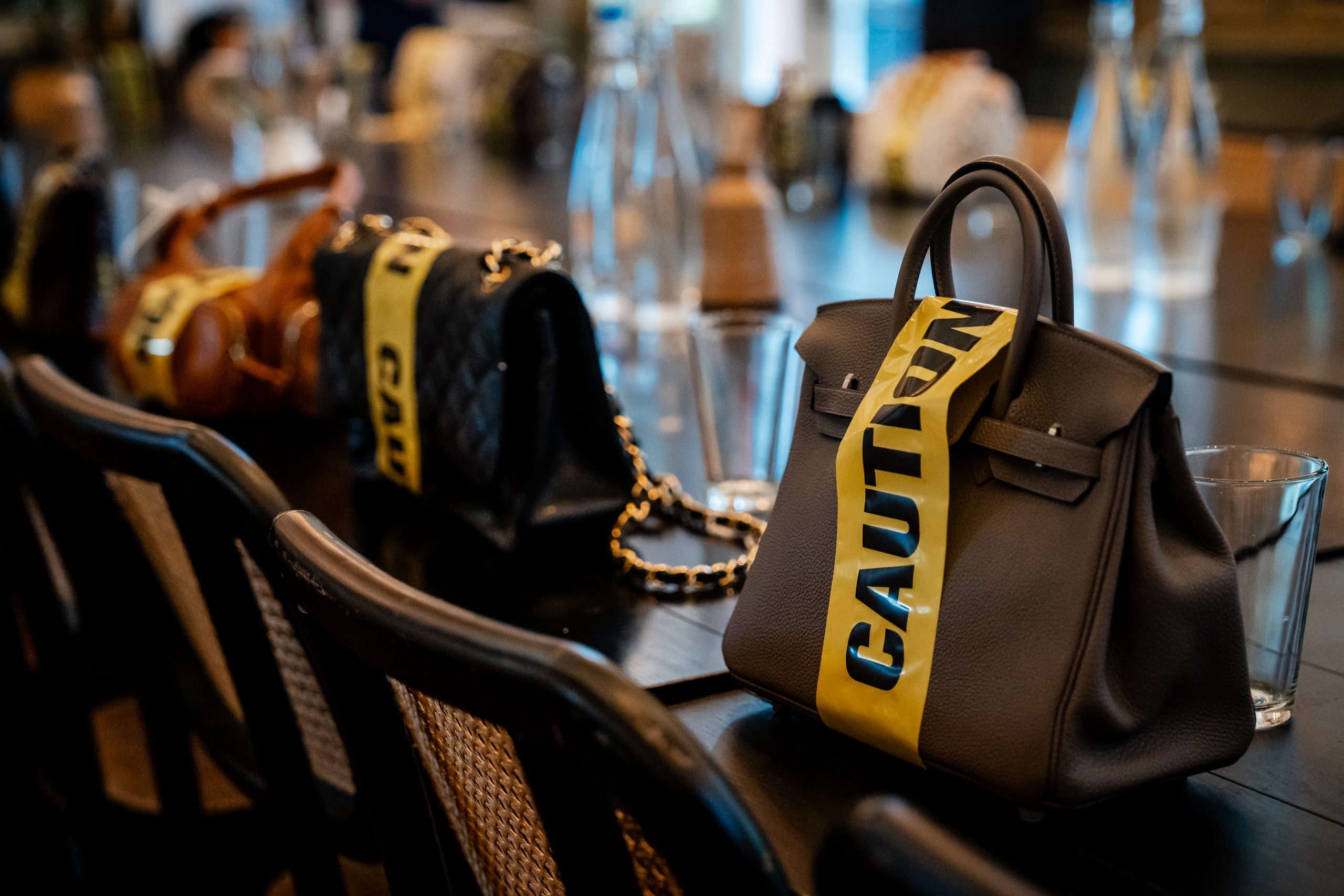
Fake Fashion & Forced Labour
Counterfeit fashion is booming — and with it, so is human exploitation. For too long, fake fashion has been trivialised as a harmless shortcut to a more desirable lifestyle. A bargain. A slice of luxury at a fraction of the price
In the past five years, counterfeit fashion has gone mainstream. What was once seen as a fringe activity is now normalised and is increasingly viewed as a savvy economic choice, particularly among Gen Z. Driven by global demand and rapid technological change, the counterfeit fashion market has exploded, now worth an estimated £274 billion a year.
But if it’s fake, someone paid the price.

EXPLOITATION EXISTS END TO END IN FAKE FASHION SUPPLY CHAINS, AND IN THE WORST CASES, IN THE FORM OF FORCED LABOUR, CHILD LABOUR & HUMAN TRAFFICKING
For the organised crime groups behind counterfeit operations, fake handbags, trainers, and football shirts generate more than twice the profit of drugs, the second-highest income stream. Evidence shows that exploitation (including child labour and forced labour) exists end-to-end in illicit supply chains from manufacturing and production through to assembly, distribution, and sale.
Despite the scale and severity of the problem, the truth behind counterfeiting remains hidden.
Through the Fake Fashion & Forced Labour programme, The Anti-Slavery Collective is looking to change that. Counterfeit fashion must be recognised for what it truly is: a serious form of organised crime, inseparable from human exploitation.